
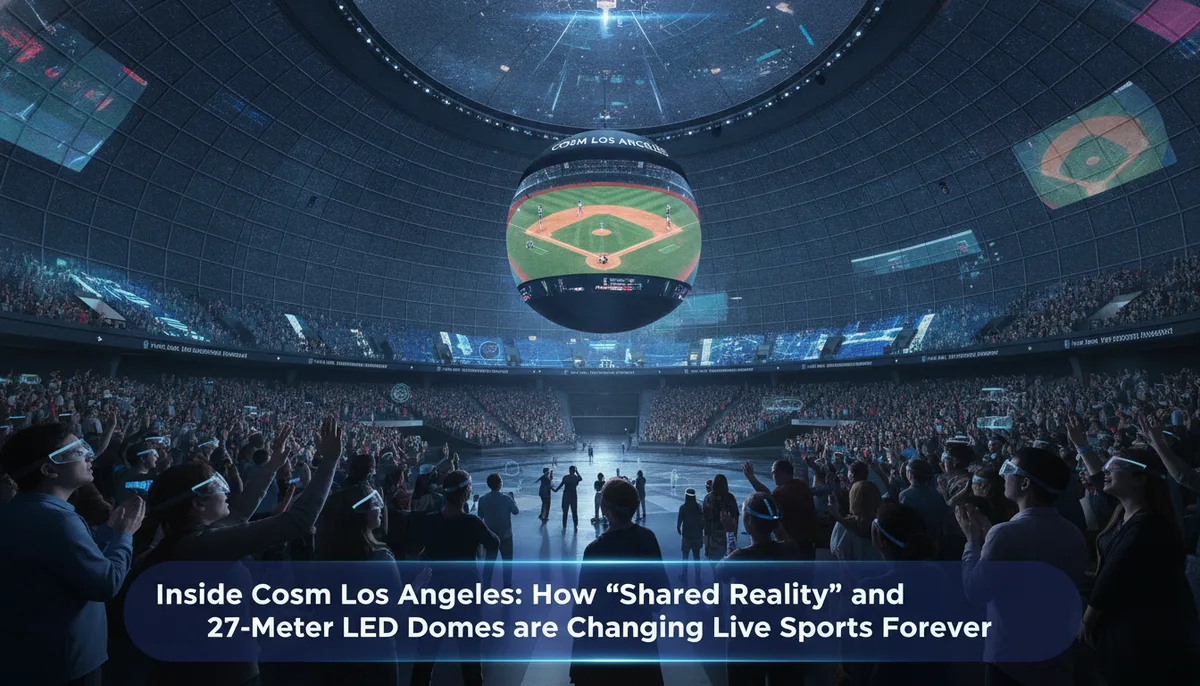
Inside Cosm Los Angeles: How "Shared Reality" and 27-Meter LED Domes are Changing Live Sports Forever
The landscape of live entertainment is undergoing a seismic shift. For decades, the pinnacle of sports viewing was either being physically present in a stadium or watching a high-definition broadcast on a large home television. However, a new category of venue is bridging the gap between the two, offering an experience that is arguably more immersive than a front-row seat.
At the forefront of this revolution is Cosm Los Angeles. Located in the heart of Inglewood’s burgeoning sports and entertainment district—occupying the historic grounds where the Hollywood Park racetrack once stood—Cosm is not just a sports bar or a cinema. It is a technological marvel that utilizes "Shared Reality" to transport fans directly into the action of the world’s biggest sporting events.
The Architecture of Shared Reality: Beyond the VR Headset
The term "Shared Reality" is central to understanding what Cosm offers. While Virtual Reality (VR) has long promised immersion, it is often a solitary experience, requiring bulky headsets that isolate the user from their surroundings. Cosm flips this script by bringing the immersive technology into a physical, social space.
The centerpiece of the Los Angeles venue is a staggering 27-meter LED dome. This isn't a simple projection; it is a high-resolution curved surface that fills the viewer’s entire field of view. When you sit in the "Dome," you aren't just watching a game; you are effectively placed inside the stadium.
This technology has its roots in a surprising place: planetariums. According to Devin Poolman, Chief Product and Technology Officer at Cosm, the company’s intellectual property and technical framework evolved from the systems used to power modern planetariums. By taking the educational immersion of a star show and applying it to the high-stakes energy of a UFC fight or a Premier League match, Cosm has created a venue that feels both futuristic and deeply communal.
The Technical Backbone: How Dell Powers the Dome
Achieving a seamless, high-resolution experience on a 27-meter scale requires an immense amount of "behind-the-scenes" horsepower. Cosm does not simply take a standard 1080p or 4K feed from a major network and stretch it to fit the dome. Doing so would result in a pixelated, underwhelming image.
Instead, Cosm deploys its own proprietary high-resolution cameras and specialized equipment to the actual sporting venues. These cameras capture a much wider field of view than traditional broadcast cameras, allowing the system to map the footage onto the curved LED surface without distortion.
The data requirements for this workflow are astronomical. To manage the real-time rendering and synchronization of these feeds, Cosm relies on a sophisticated infrastructure powered by Dell. This involves:
- Distributed Computing: Processing the massive video files across multiple nodes to ensure zero latency.
- Real-Time Rendering: Adjusting the perspective of the video feed so that it looks natural from every angle within the dome.
- High-Resolution Video Workflows: Moving terabytes of data from the stadium to the Los Angeles venue in milliseconds.
For tech enthusiasts who manage their own data at home, the scale of Cosm’s infrastructure is a testament to the power of modern server technology. While you might not be rendering a 27-meter dome, ensuring your own digital life is protected requires similar attention to hardware. If you are looking to build a robust foundation for your own high-resolution media, checking out the Best Home Servers for Storing 10 Years of Family Photos (and Keeping Them Private) is a great place to start.
A New Perspective on Live Sports
The visual impact of the Cosm dome is most apparent when watching fast-paced sports like hockey or soccer. In a traditional broadcast, the camera follows the puck or the ball, often cutting off the tactical movements of players "off the ball."
Hockey and the Sense of Motion
In a hockey presentation at Cosm, the speed of the game is amplified. Because the screen wraps around your peripheral vision, the motion of the players feels visceral. You can see the entire offensive zone at once, allowing you to anticipate plays before the commentator even mentions them.
UFC: The Ultimate Ringside Seat
For combat sports fans, the experience is even more intense. Cosm places cameras directly against the Octagon fencing. When watching a UFC fight, the scale of the fighters is life-sized, and the perspective makes it feel as though you are leaning against the cage yourself.
Soccer and Stadium Atmosphere
During Premier League matches, the technology captures the scale of the stadium. Fans at the Los Angeles venue—often dressed in their team’s kits—react to the crowd noise and stadium chants as if they were in London or Manchester. The "Shared Reality" aspect shines here, as the collective energy of the fans in the room mirrors the energy of the fans on the screen.
The Infrastructure of Immersion: Data Speed and Storage
To maintain the illusion of reality, the video must be flawless. Any stutter, lag, or compression artifact would immediately break the immersion. This is why the underlying hardware, including the storage and memory components, is so critical.
The move toward PCIe Gen6 and high-performance SSDs is what makes these real-time, data-heavy experiences possible. Just as Cosm uses enterprise-grade hardware to deliver "Shared Reality," consumers are beginning to see the benefits of these advancements in their own setups. For a deeper look at the hardware driving these speeds, see our analysis on Micron 9650: How PCIe Gen6 SSDs are Redefining the Speed of AI and Private Data.
The Future: 100 Venues Worldwide
The Los Angeles and Dallas locations are just the beginning. Cosm’s leadership has expressed a vision to bring over 100 of these venues to cities across the globe. The goal is to democratize the "front-row" experience. Not everyone can fly to Paris for a soccer match or secure ringside seats for a title fight, but they can visit a local Cosm venue.
The flexibility of the backend infrastructure allows a single venue to host multiple, vastly different events in one day. In the morning, the dome might show a European soccer match; in the afternoon, a college football game; and at night, a live concert or a movie screening. This agility is only possible because of the software-defined nature of the venue, where the content is reconfigured on demand.
Bringing the Immersive Experience Home
While most of us won't be installing a 27-meter LED dome in our living rooms anytime soon, the trend toward immersive entertainment is influencing home theater technology. High-end OLED displays and ultra-short-throw projectors are attempting to capture a fraction of that "field-of-view" magic.
To complement a high-end visual setup, many users are turning to multi-screen configurations or specialized hardware to manage their content. If you are looking to expand your own viewing capabilities, the KYY X90G Quad Review: Transforming Your Laptop into a Four-Screen Powerhouse offers insights into how to maximize your visual real estate.
Conclusion: A New Era for Fandom
Cosm Los Angeles represents a significant milestone in the evolution of media consumption. By combining the social atmosphere of a live stadium with the technical precision of high-resolution, real-time rendering, it has created a "third space" for fans.
It is a reminder that as our data processing capabilities grow—powered by companies like Dell and innovations in distributed computing—the line between the digital and physical worlds will continue to blur. Whether you are a die-hard sports fan or a tech enthusiast, the "Shared Reality" at Cosm is a glimpse into the future of how we will all experience the world together.